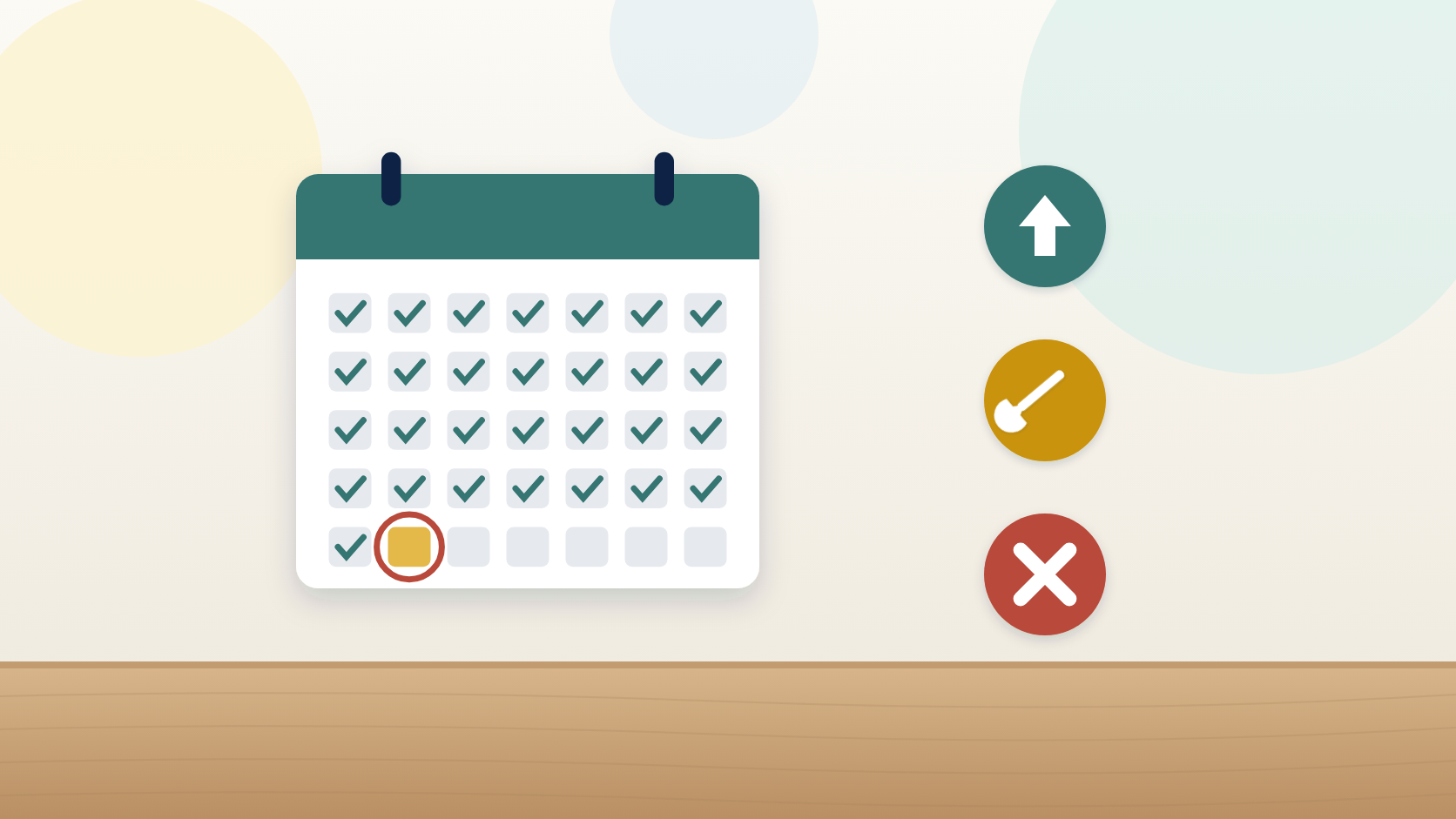
The 30-Day AI Pilot: Scale, Fix, or Drop on Day 30
Run a 30-day AI pilot the right way: one workflow, one tool, one owner, a Baseline, a Human Checkpoint, and Scale, Fix, or Drop rules set early.
Look at your credit card statement. Most small business owners find at least one software subscription they forgot about. It got signed up for in a burst of excitement and never got a review date.
That's the real failure mode of AI in a small business. Not the tool that crashes. The tool that just sits there. You keep paying. Half the team uses it, half doesn't. Nobody knows if it's helping. Six months later you've spent real money on something whose only job is making you feel like you're keeping up.
The fix is a short, boring, honest AI pilot. One month. A number before and a number after. And a decision on a date you picked in advance: Scale, Fix, or Drop.
A Drop isn't a failure. No decision is.
Here's what most people get wrong. They think Drop is a failure.
It isn't. Drop is one of the best things that can happen. You spent 30 days and maybe one month of subscription to learn a tool doesn't fit your business. That's cheap.
The expensive outcome is the one nobody talks about: no decision at all. A clear Drop beats a fuzzy maybe every single time.
So the whole point of a pilot isn't to prove the tool works. It's to force a decision you can trust.
The 30-Day Pilot: one workflow, one tool, one owner, one month
A 30-Day Pilot is one workflow, one tool, one owner, one month, with a Baseline and KPIs. Every one of those "ones" matters.
One workflow. Small businesses run on attention, and attention is short. Every new routine takes energy to start. Do that for one workflow and it's manageable. Do it for three and none get the care they need. Then all three look like failures when they never got a fair shot.
One tool. If you change tools halfway through, you can't tell what worked.
One owner. That doesn't mean one person does all the work. It means one person makes sure the pilot runs, the numbers get recorded, and the review happens. Write their name down. When a pilot has no owner, it doesn't fail loudly. It just fades.
One month. A week is too short. You're still learning the tool, and one odd week can swing every number. Ninety days is too long for a first pilot. The plan drifts, and if it's not working you've wasted a quarter finding out. Thirty days gives you about four real work weeks, a busy stretch and a slow one, and enough runs to trust the numbers.
Two more pieces make it measurable. The Baseline is how the task performs today, measured before the tool goes in: time, cost, errors, response time. The KPI is the number you watch to judge the tool. Track two kinds. A Leading Indicator is an early sign it's working, like minutes per task or edits per draft. A Lagging Indicator is the business result that shows up later, like revenue, repeat customers, or close rate.
If you don't have a Baseline yet, don't start. Measure first. A careful Baseline is often very different from your gut estimate.
Every pilot needs a Human Checkpoint written into it
Before day one, write down exactly where you step in. A Human Checkpoint is the specific point where you review, approve, or correct before anything reaches a customer or the books.
"I'll look it over" isn't a checkpoint. A checkpoint names who checks, what they check, and the standard. Three to five yes-or-no checks. "Does every price match the current price list?" "Does the date match the schedule?" "Would I be comfortable if the customer read this out loud to my best client?"
Most people think the checkpoint slows AI down. It's the opposite. Without it, you can't trust the output, so you either redo everything or quit after the first embarrassing mistake. With it, you check the five things that matter and move on. You can only drive fast in a car with good brakes.
The pilot is also where you find out whether the checkpoint is in the right place. Maybe it catches real problems every week and has to stay exactly where it is. Maybe it catches nothing for a month and could be lighter. Either way, you decide based on what happened. You don't hand AI more work because it feels good. You hand it more because the checkpoint data says it's safe.
Write your Scale, Fix, or Drop rules before day one
The Scale, Fix, or Drop Decision is the day-30 call:
- Scale. The pilot beat your targets. Expand it: every job instead of most, a second person trained, or the same tool on your next opportunity.
- Fix. It came close. Adjust one or two things, like the prompt, the trigger, or the checklist, and rerun for another 30 days.
- Drop. It missed. Cancel, write down what you learned, and move to the next opportunity on your list.
This is the step people skip, and it's the one that makes the pilot honest. Write the rules with numbers before you start. A simple version:
- Scale if you hit all your Leading Indicator targets and no serious error reached a customer.
- Fix if you hit at least half, or hit them all but found a checkpoint problem you can name and solve.
- Drop if you missed most targets, the tool created more checking time than it saved, or a serious error reached a customer more than once.
- Stop now if something you can't fix with a prompt change happens, like customer data leaking or a customer harmed by a mistake.
Then once a week, take 15 minutes. Not an hour. Look at your Leading Indicators, your checkpoint tally, and any changes you made. Write one line. "Week 2: same-day 71%, caught one wrong part number, updated prompt Tuesday." Those lines become the story you read on day 30, and they keep you from rewriting history when it's time to decide.
What day 30 looks like
Picture Dana, who owns a six-person HVAC and plumbing company. Her goal: same-day quotes by June 30. Her workflow: a tech submits complete job notes and photos, an AI add-on drafts the quote, Dana checks every price and scope line, and the quote goes to the homeowner.
Her Baseline, measured over two weeks before the pilot: 18 quotes, only 1 sent same-day, about 28 minutes of writing per quote, 2 corrections after sending, and a 31% close rate last quarter.
Her rules: Scale if 80% or more go out same-day, 12 minutes or less per quote, three or fewer edits, zero pricing errors reaching customers, and close rate at 31% or better. Stop now if customer data leaves the business or a quote goes out without her approval.
Week one was rough: 46% same-day and two prompt fixes. This is where most people quit. Dana didn't, because clumsy isn't broken. Week two hit 71%. Week three, 88%. Week four, 92%.
On review day she lays it out. Across the month, 83% same-day. Eleven minutes per quote. 2.4 edits per draft. Her checkpoint caught four errors, and none reached a customer. Close rate for the month: 34%. She reads her rules. Every Scale condition is met.
Decision: Scale. Next action on the calendar: run it on every quote, write a one-page how-to so her office manager can run the AI step while she's in the field, and keep herself as the checkpoint on every quote.
The best part wasn't in the numbers. Dana used her freed-up hours to personally call homeowners on big jobs. Two of those calls turned into replacement systems. AI did the typing. Dana did the selling.
The honest caveats
A 30-Day Pilot doesn't prove everything. One month of a Lagging Indicator is a hint, not proof. Dana's close rate went up, but she didn't celebrate it as a sure thing. If your Leading Indicators all pass but a Lagging Indicator moves the wrong way, pause before you Scale. Maybe faster work is lower-quality work. Maybe customers liked the old personal touch. Find out why.
Rules aren't a cage, either. Something might happen that the rules didn't plan for. Use your judgment. But start from the rules, not from how you feel on review day. The temptation to change the rules after you see the results is real.
And a decision without a next step is just an opinion. Whatever you pick, put the next action on the calendar.
That's what keeping your judgment in charge looks like over time. AI is not replacing you. It's amplifying you, and a pilot is how you prove it with your own numbers.
Key takeaways
- The expensive outcome isn't a failed AI tool; it's a tool nobody ever decides about.
- A 30-Day Pilot is one workflow, one tool, one owner, one month, with a Baseline and KPIs.
- Write a specific Human Checkpoint into the pilot: who checks, what, and against what standard.
- Set Scale, Fix, or Drop rules with numbers before day one, plus a stop-now rule.
- Judge the trend, not week one, and put the next action on the calendar.
Frequently asked questions
How do I run an AI pilot in a small business?
Pick one workflow, one tool, and one owner, and run it for 30 days. Before starting, measure a Baseline for how the task performs today, choose one or two leading and lagging indicators, and write a specific human review step. Set numeric rules for what counts as Scale, Fix, or Drop. Check the numbers for 15 minutes each week and make the call on a date set in advance.
How long should an AI pilot last?
About 30 days works well for a first pilot. One week is too short because you're still learning the tool and a single odd week can swing the numbers. Ninety days is too long because focus drifts and a failing tool wastes a full quarter. A month covers roughly four work weeks, including busy and slow stretches, with enough runs to trust the results.
What is the Scale, Fix, or Drop Decision?
The Scale, Fix, or Drop Decision is the call made at the end of a 30-day AI pilot. Scale means the pilot beat its targets, so you expand it. Fix means it came close, so you adjust one or two things and rerun. Drop means it missed, so you cancel and move to the next opportunity. The rules for each should be written with numbers before the pilot starts.
How do I measure whether an AI tool is working?
Measure a Baseline before the tool goes in, such as time per task, error count, or response time. During the pilot, track leading indicators that move quickly, like minutes per task or edits per draft, and lagging indicators that show business results later, like close rate or repeat customers. Compare results to the Baseline and to targets you set in advance.
Is dropping an AI tool after a pilot a failure?
No. Dropping a tool after a clear 30-day test is a cheap, useful result. You spent a month and perhaps one subscription payment to learn the tool doesn't fit. The costly outcome is never deciding at all: paying for a tool indefinitely while nobody knows whether it helps. A clear Drop frees attention and budget for the next opportunity.
Where this goes next
Module 3 of my self-study course, AI Tools That Drive Growth, walks you through mapping the workflow, setting your Baseline and KPIs, running the 30-Day Pilot, and pulling it all into a one-page AI Integration Plan.
See the course